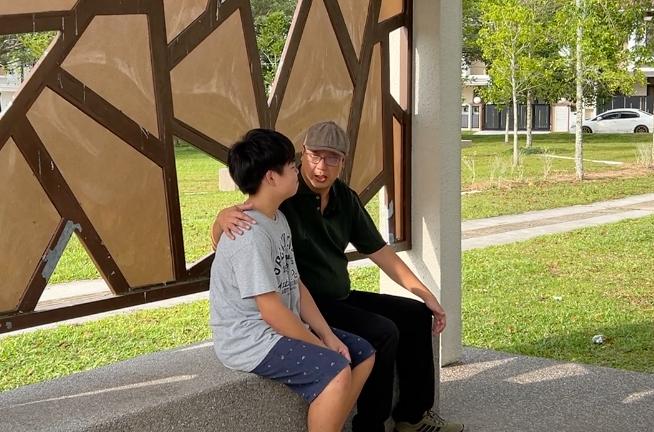
Parenting is hard. Whether it’s a newborn child, a toddler, teenager, or young adult, each stage of the journey presents its own challenges. As a parent, sometimes life can get overwhelming, and we may feel bogged down by everything that is thrown at us. Yet we can get our feet on the ground and tackle the challenges that life throws at us. And one thing I’ve learnt, from my personal journey as a parent, counsellor, coach and mentor, is that we need to be purposeful in all that we do.
We need to become a purposeful parent.
What does it mean to be a purposeful parent?
It means we need to be intentional as we connect with our children.
- P – Presence: Being physically and emotionally available. We need to provide undivided attention during the big and small moments in our children’s lives.
- U – Understanding: Looking beneath the behaviour. We need to ask what is our child trying to communicate when they experience an emotional meltdown or tantrum.
- R – Regulation: Modelling calmness. We need to manage our own emotional triggers in order to be the anchor for our children’s emotional storms.
- P – Patience: Viewing parenting as a marathon, not a sprint. We need to allow space for mistakes – both ours and theirs.
- O – Observation: Noticing the unique strengths and attachment wounds of our children. We need to tailor our approach to their specific temperament.
- S – Safety: Creating a psychologically safe home. We need to provide a space where children feel they can be honest, vulnerable, and messy, without the fear of losing our love.
- E – Empathy: Validating their feelings before attempting to correct their behaviour. Connection must always come before correction.
Parenting Article Archive:
Parenting on Purpose – Our parenting journal since 2011. This is a story of our parenting journey, where we share how we bring up our children in order for them to know and understand their purpose in life.
Focus on the Family Article Archive – I have been writing articles for Focus on the Family Singapore since 2019. These are some of the more popular feature articles, covering topics such as new parent challenges, discipline, sibling rivalry and teenage transitions.
Parenting Articles:
“When you parent by intent you take the time to listen to the heart of your child. You notice which colours he chooses in his drawing, and then take the time to understand the reason for his choice. You listen to every detail of the long story that she tells you, and then painstakingly ask her questions to either draw out the details, or to help her develop her narrative. You turn to the little child whose general body language screams out to you that he or she had a tough day at school, and then connect to him or her in an empathetic manner, giving the child the physical and emotional space to be real with his or her emotions.”
One of the earlier articles we wrote for our Parenting on Purpose blog. It discusses how to become a purposeful parent, and to parent by intent.
Fathering & Parenting
Overcoming My Insecurities as a Dad: Three Lessons in Consistency –
“It is hard to be a dad these days, especially when we ourselves grapple with so many insecurities. The natural thing for most insecure fathers would be to distance themselves from their children, in the hope that they never reveal how insecure they are. Unfortunately, this behaviour results in their children becoming unsure of themselves and perpetuates the cycle of insecurity.”
In this article written for Focus on the Family Singapore, I share three important lessons on how to overcome my own insecurities as a father and to be there for my children.
“None of us fathers are perfect. Each of us has our own struggles even as we are faced with the various facets of parenting; not to mention our own internal childhood fears and concerns, which we bring with us into our marriages and into our parenting.”
I share about attachment theory and how securely-attached children need a father figure for them for feel safe.
“Parents need time to think. Oftentimes as parents, we rush by our day tending to the needs of our children without much rest.”
I share the importance of spending time to take stock and re-calibrate our goals and visions in parenting and in life.
How can everyday parents avoid sibling rivalry? What can they do to help their children feel loved and secure? In this article for Focus on the Family Singapore, we share three parenting principles to help our children steer away from sibling rivalry and towards sibling love.
Behaviour & Discipline
How to Discipline Your Child for Lasting and Positive Change –
“Discipline isn’t just about correcting outward behaviour. Change can only be lasting if there is an inward change, a genuine change of the heart and attitude.”
In this article for Focus on the Family Singapore, we share strategies parents can adopt instead of resorting to traditional forms of punishment.
“Despite their lack of verbal communication, 2-year-olds are talking to us in many other ways. And if we communicate with them through the gentle art of reasoning and persuasion, we are concurrently honing skills of logical thinking. This will be very useful for them when they also grow in their verbal ability.”
We share strategies on how to help our children negotiate the “Terrible Two” years, while at the same time managing non-negotiables such as openly-defiant behaviour or actions that could result in danger.
“I believe that our discipline has to be “seasoned with mercy”. I feel that when we discipline our children, we have to assess the circumstances in which our children did wrong.”
A reconsideration on an earlier perspective of discipline and how we need to “respond not react”, and “connect not correct”.
How to Parent a Strong-Willed Child –
“Before we address the behaviour of the child, we need to first understand all the variables that led to the behaviour.”
In this article for Focus on the Family Singapore, we share how building relationships and connecting with our children are key towards parenting children who have strong wills.
What Scolding Really Does to Your Child –
“Shaming makes the child believe that he or she is wrong for feeling, desiring or needing something.”
Scolding has often been used as a traditional way to correct negative behaviour. In this article for Focus on the Family Singapore, we share the importance of loving boundaries, and how they are essential in helping children choose what is the right thing to do.
Raising A Responsible Child Does Not Need Harsh Methods –
“Children should be treated as “persons-in-training,” individuals to be groomed as early an age as possible.”
We share how building healthy habits and allowing for natural consequences can be an alternative to harsh punishment.
Transitions
Surviving the Teenage Transition –
Understanding aspects of identify and relationships, and how these affect our children’s development from tweens to teens. This article was first written for Focus on the Family Singapore.
What Does It Take for a Successful Transition To Secondary School? –
“How then can we help our kids grow to become happy, confident and secure individuals? How do we empower them to discover what they want in life? And how do they build the confidence needed to effectively relate with others? The solution is to build a healthy sense of self; what in psychology is described as a healthy “self-concept”.”
We share with Focus on the Family Singapore several practical skills that will help teens to build a healthy sense of self and adjust well to a new school environment.
Podcasts:
Male-Female Partnership in the Marriage –
Partners in Parenting. What does it mean to raise a family while growing your marriage partnership? We share with Focus on the Family Singapore what it means to build a parenting legacy by focussing on the strong marital bonds that we share as a couple.
“That’s the legacy we hope our children carry into their own relationships and marriages—a strong foundation of love, trust, understanding, and mutual respect.”
How to Say Sorry and be a Safe Space for Our Children –
“No human being is perfect and it is only natural to expect that we will make mistakes in our relationships, especially the ones closest in proximity.”
How can parents create a safe space for our children to be real and unafraid to express both their joys and struggles with us? We share with Focus on the Family Singapore how we have built a family culture of saying sorry authentically, while providing our children with the emotional vocabulary to express their feelings.
Our Children Grow To Value What We Praise –
As the saying goes, “Life is not a destination to be reached, but a journey to be enjoyed.” How can our children enjoy the journey of learning? And how can parents learn to praise effort over results so that our children grow up knowing and appreciating the things that truly matter?
We share with Focus on the Family Singapore about building character and how our children’s identities and self-worth are impacted by what we praise and reinforce.
Connect With Us:
Contact us here if you would like to experience a Parent-Coaching Session in one or more of the 7 PURPOSE areas (Presence, Understanding, Regulation, Patience, Observation, Safety & Empathy).
We are also open to collaborations on parenting workshops or other partnerships.
Connect with us on IG here.

 The Social Factor